Vortrag auf Einladung der ÖGUF:
Across the southern Levant, the Early Bronze Age (EBA, 3700–2500 BCE) witnessed the emergence of new forms of spatial and social organization. This process of urbanization is unevenly documented, particularly in Palestine. Tulul ʿAnabta, near Tulkarem, provides a new case study for examining these developments through fortifications, architecture, resource management, and changing spatial organization.
First identified in the 1970s, Tulul ʿAnabta was investigated by Wael Abu-Azizeh from 2021 to 2023, revealing fortifications as well as domestic and monumental architecture. In 2025, the Tulul ʿAnabta French-Palestinian Archaeological Mission (TAFPAM), co-directed by Blandine Besnard (Éveha International, Archéorient, Ifpo) and Ghassan Nagagreh (Dar al-Kalima University), initiated a new research program in collaboration with the Palestinian Department of Antiquities.
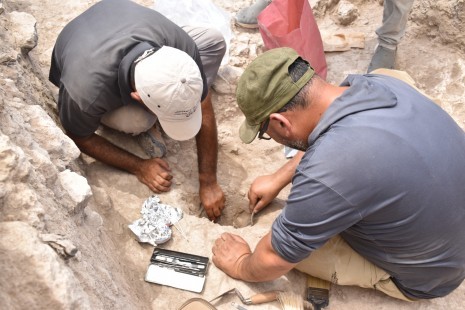
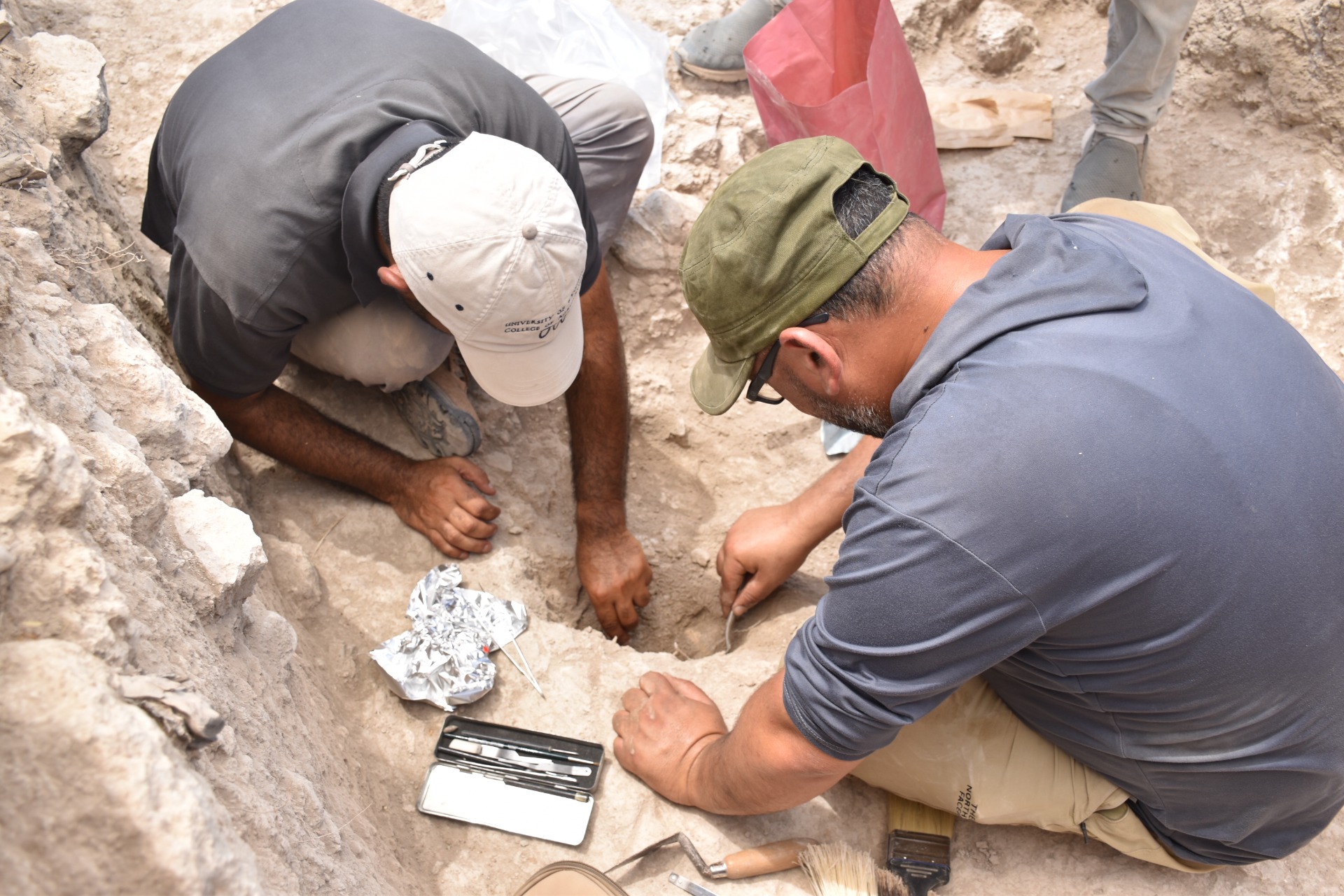
The first two years of the project have provided new evidence for the settlement’s chronology and organization through excavation and material studies. Ceramic analysis indicates a predominant occupation during EBA II (3000–2800 BCE), while a small number of sherds suggest possible activity during EBA IB (3300–3000 BCE). Excavations in Area 2 exposed substantial remains of a public building with massive walls and superimposed floors, accompanied by several large water-storage installations. Area 3 provided new evidence for domestic architecture, while Areas 1 and 4 further documented the fortifications and intramural occupation.
The lecture presents the results of TAFPAM’s 2025–2026 research and examines what they reveal about the development of Tulul ʿAnabta and its role within broader processes of Early Bronze Age urbanization in the southern Levant.
Teilnahme über Zoom
https://us06web.zoom.us/j/85767453544?pwd=7xcDta91PbbZ68iqjUJUWzQM3Ry49P.1
Teilnahme über den Internet-Browser:
https://zoom.us/join
Meeting-ID: 857 6745 3544
Kenncode: 851251